
Between Sound and Image: The Painted Universes of Leonid Iogansen
Working between two disciplines—music and painting—Leonid Iogansen approaches visual art with the sensibility of a performer and the vision of a creator. His paintings are not representations of the existing world, but independent universes shaped by rhythm, symbolism, and intuition. Drawing inspiration from nature and landscape, Iogansen’s work invites viewers into spaces that resist fixed interpretation, encouraging contemplation, contradiction, and emotional resonance.
ARTISTIC STATEMENT
Painting holds the potential for being a creator and a performer at the same time. With any representation of an existing form, one “performs” it. In so doing, fidelity to the form’s original bears a degree of objectivity. However, despite the aspect of being a “performer” in visual art, I believe that, as the end result, artists need to create their own universes, which may or may not draw building blocks from the one in which we exist, whether realistic or abstract. It is only then that the potential for expression and symbolism opens up, and an artist’s voice seeps through the brushstrokes.
In my paintings, I strive to achieve exactly that—to create a new universe with each new painting. I draw my inspiration from nature, which offers endless possibilities to empower symbolism and ideas. And, like in many other art forms, I aspire for my paintings to raise questions rather than give answers, leading to contradictory thoughts and perceptions.
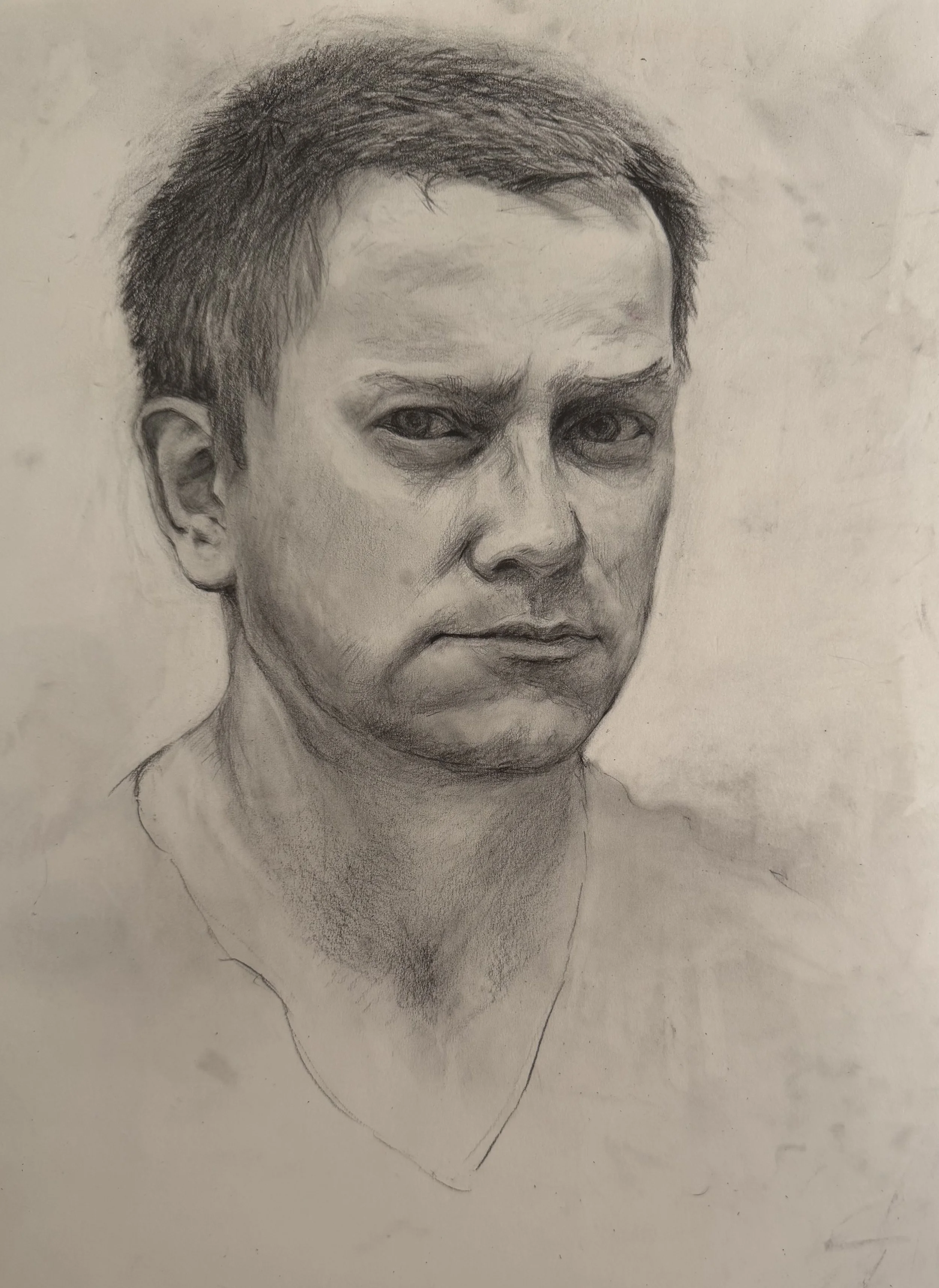
BIOGRAPHY
Throughout his life, Leonid Iogansen has pursued two disciplines—music and painting. Born in St. Petersburg, Russia, in 1981, Leonid Iogansen started playing the violin at an early age. Since that time, he has performed at numerous venues in the United States (where he moved in 1994), as well as abroad.
As a composer, Leonid has written a significant body of solo, chamber, and orchestral music, some of which has been commissioned. Two of his most recent musical endeavors include creating compositions that mix Eastern and Western instruments and experimenting with arbitrary microtonal tunings (“free microtonality”). In 2025, Leonid was awarded Third Prize at the Malta International Music Competition for his string quartet, Sounds of Night.
As an artist, Leonid has won painting competitions, both local and international. Some of his recent achievements include an Honorable Mention Award from the Blue Space Gallery International Competition. His paintings draw inspiration from nature and landscapes and integrate symbolism and ideas.
Leonid is also an active mobile app developer and has published many innovative apps, many of which are designed for musicians, such as Music Score Pad—a digital sketchbook with staves designed for composers for handwriting and editing handwritten musical scores. Another app, Tollsmart, has become internationally recognized and now powers toll calculations in Google Maps.
Leonid holds a Summa Cum Laude Bachelor of Music in violin performance and composition from Boston University, where he was a Trustee Scholar from 2001–2003, as well as a Master’s degree with the same majors from the Peabody Conservatory. He holds a PhD in Composition from the University of Iowa (2016), where he studied with Professor David Gompper.
Can you tell us about your journey as an artist? How did it all begin?
I was 9, I believe, when we were accompanying my father to a physics conference in the Carpathian Mountains in the summer (it must have been 1990). By that time, I had already been training as a violinist for a few years. During the few weeks we spent there, I had a chance to explore the surroundings, which were decorated with paintings made by local artists. I found them very beautiful, and they often portrayed local scenery—gorgeous landscapes with mountains and trees, frequently rendered in an impressionist manner.
When we returned home, my sister and I each received a present: a children’s collection of gouache paints. I recall that my sister took the initiative to try to draw something with them, which, of course, I couldn’t let go without countering. And I did, except that the format I chose was to glue four standard sheets of paper together to form a giant piece of paper. This incident, and the first painting (of a tree and a river), became the spark that carried forward the inspiration I had received during the trip.
What themes or ideas do you explore in your work?
I draw inspiration from two unrelated artistic quests, which I try to combine into a single entity. One is the natural beauty of the surrounding world, and the other—timeless issues of human suffering in dealing with the challenges of life and nature. The first provides inspiration for the setting, while the other offers an endless trove of ideas one can explore through art.
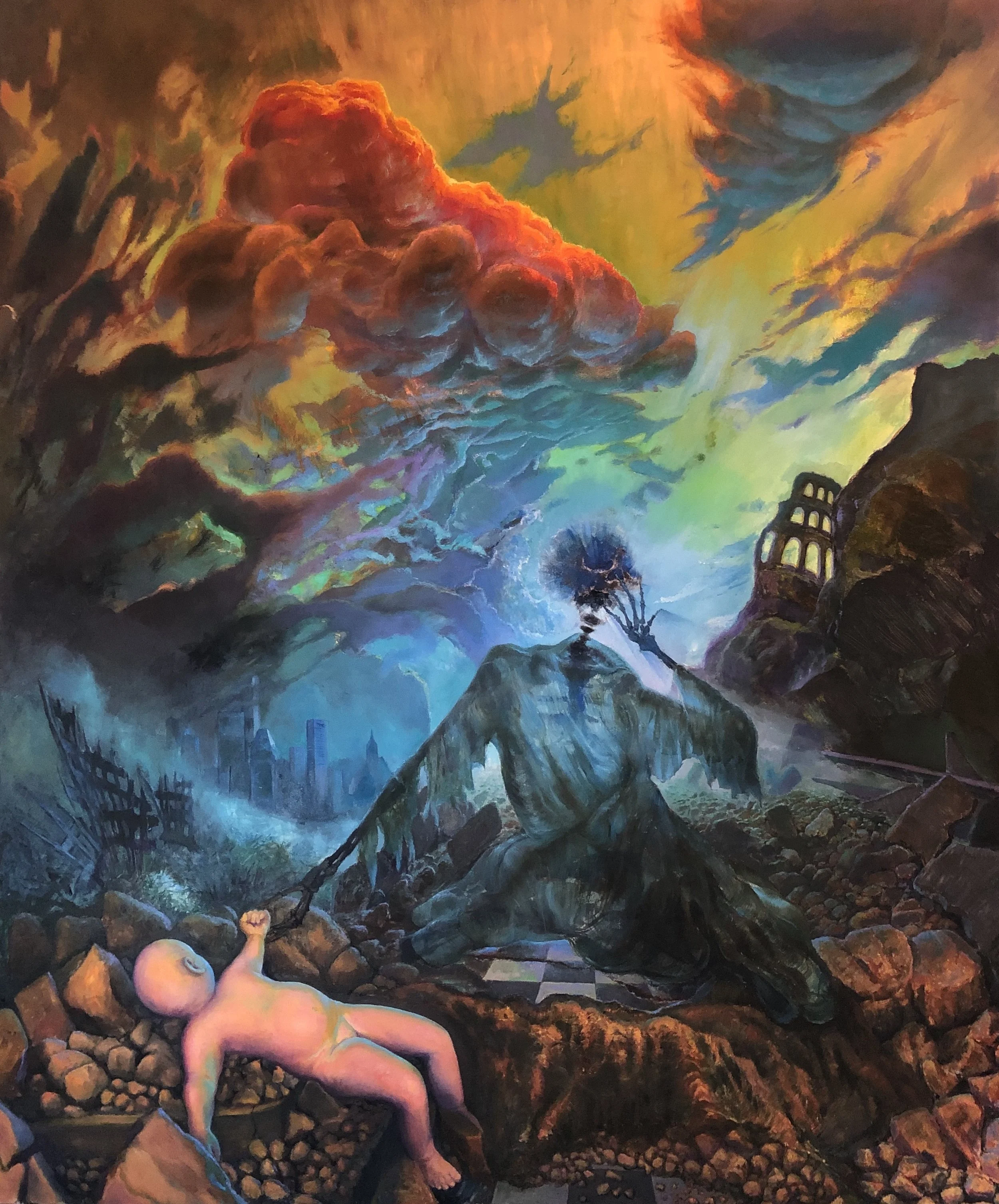
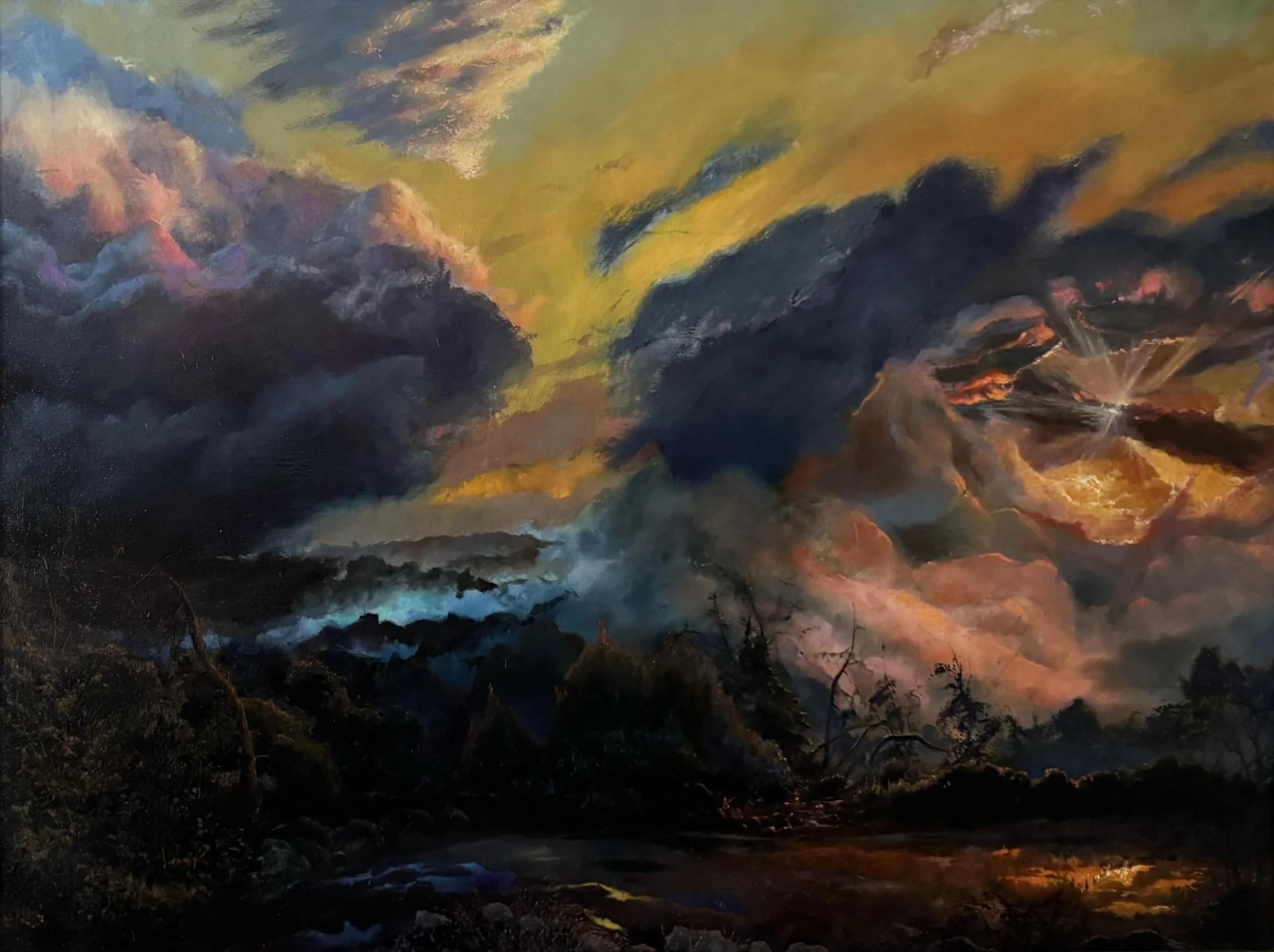
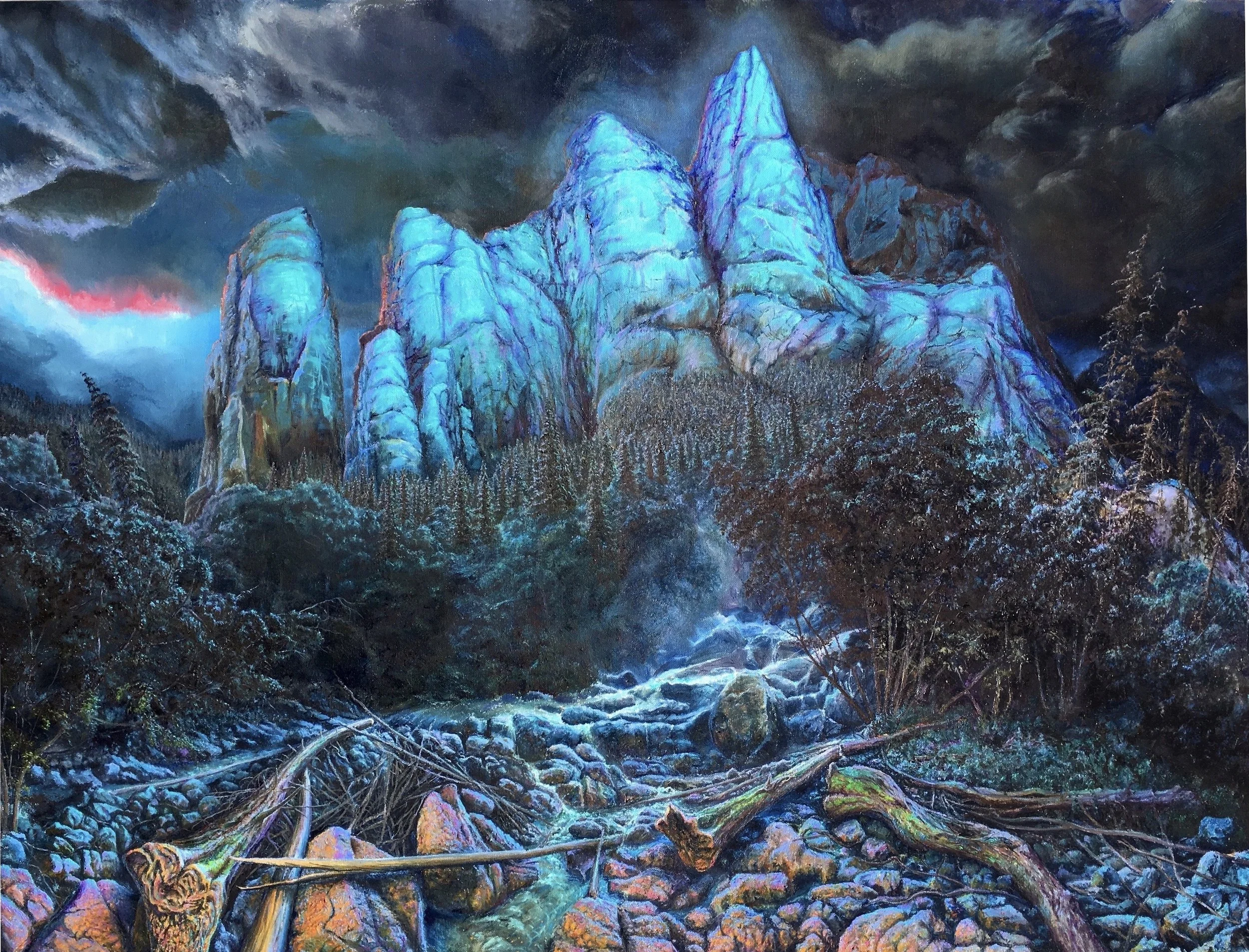
An artist, in my view, bears a responsibility to create his or her own universe, one that may or may not resemble the existing one. Two of the works I present here are examples of this union—Crying Death and Turquoise Night. Both contain allusions to dramatic natural landscapes and imagery, yet they bear a timeless human element.
Crying Death features a child as a symbol of lost innocence, encountering its misery in the face of the death of civilizations. Turquoise Night alludes to the stronghold of a family in an otherwise cold, dark world.
Do you find inspiration in other disciplines,such as music,literature or film?
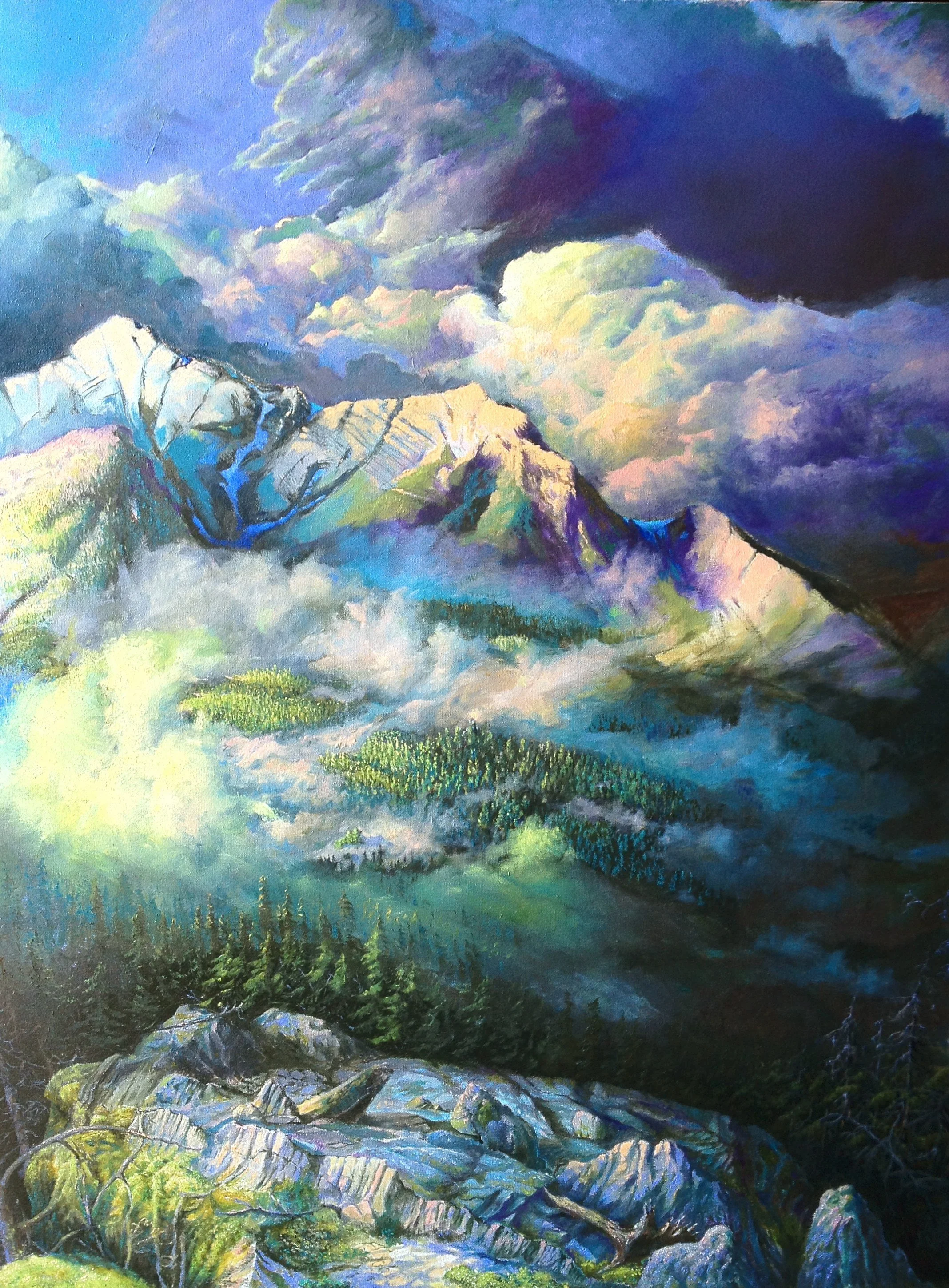
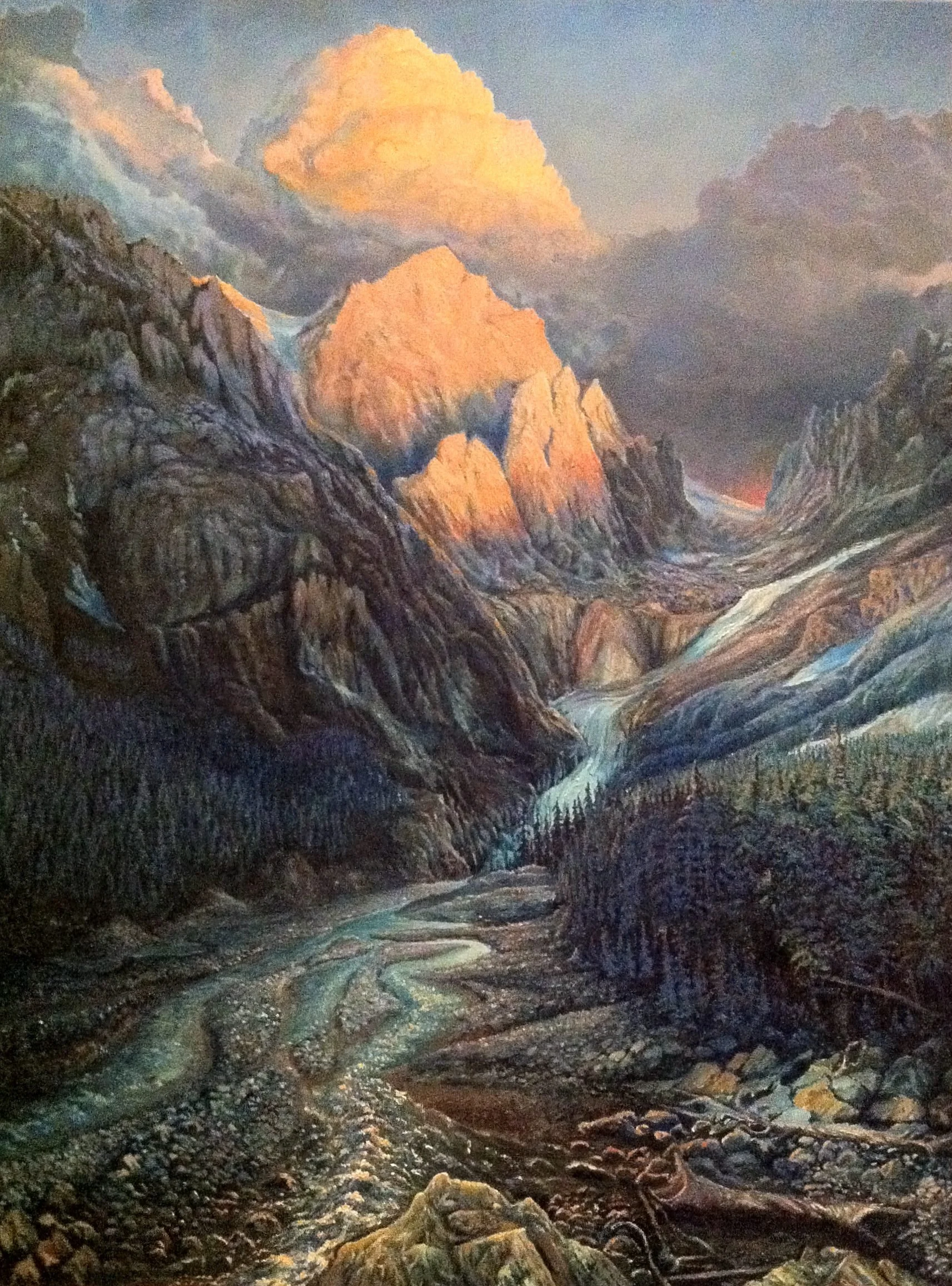
As a serious musician—a composer and a violinist—I often find myself incorporating knowledge of musical composition into my paintings, such as the relationship between micro and macro scales within a work. Enigmatic Light is an example of this relationship, where the shapes of “micro” elements are replicated in the overall composition. In music, we often attribute coloristic elements to tones and chords. I find myself doing the opposite in painting: I perceive colors and values as bearing tonal characteristics. Darker sections of a painting are low-pitch harmonies filled with counterpoint.
What has been the most challenging aspect of your artistic journey so far?
By far, the most challenging aspect has always been finding a teacher. I am primarily self-taught. I received rudimentary instruction in drawing as a child through private lessons with Professor Levina from the St. Petersburg Academy of Art, but subsequently, finding an artist who would provide me with a complete formal education has been unsuccessful. Auditing classes and regularly attending figure drawing sessions have been very helpful, though.
What has been your most meaningful or memorable project to date?
Crying Death — the painting presented here. The idea for this work was born a long time ago, as my reaction to the tragedy of 9/11. I kept postponing approaching it, as I felt I was technically not ready. The details of its composition needed careful thought as well: the postures, the chessboard floor (as if playing chess for life), the inverted sunset, etc. It is also the largest painting I have attempted, measuring 72″ × 60″.
How has the digital age and social media impacted your practice and reach as an artist?
One definite positive aspect of the digital age and social media is the ability to build an audience and, ultimately, a name—arguably more quickly than in a previous era. There is a downside to this: a photo of a painting does not capture its full essence. I often struggle with this, because I find that even the best photos of my work barely look satisfactory.
Another definite advantage is the ability to participate in competitions. After a while, I notice the same artists across different contests. Becoming “recognizable” is definitely a positive outcome of the digital age.
What do you hope people feel or take away when they view your art?
I believe art needs to raise questions and highlight the juxtapositions of conflicting ideas. For me, drama in art is created this way. Someone once said that musicians are doctors of the soul; I think this extends to artists as well. It is through drama that we extricate our trapped spirit from the dark corners of our compartmentalized subconscious and liberate it. I hope my art can accomplish this.
Contact
leogansen@gmail.com
http://www.leonidiogansen.com
Instagram: @leonidiogansen