
Jia Man
Ikebana, Photography & Impermanence
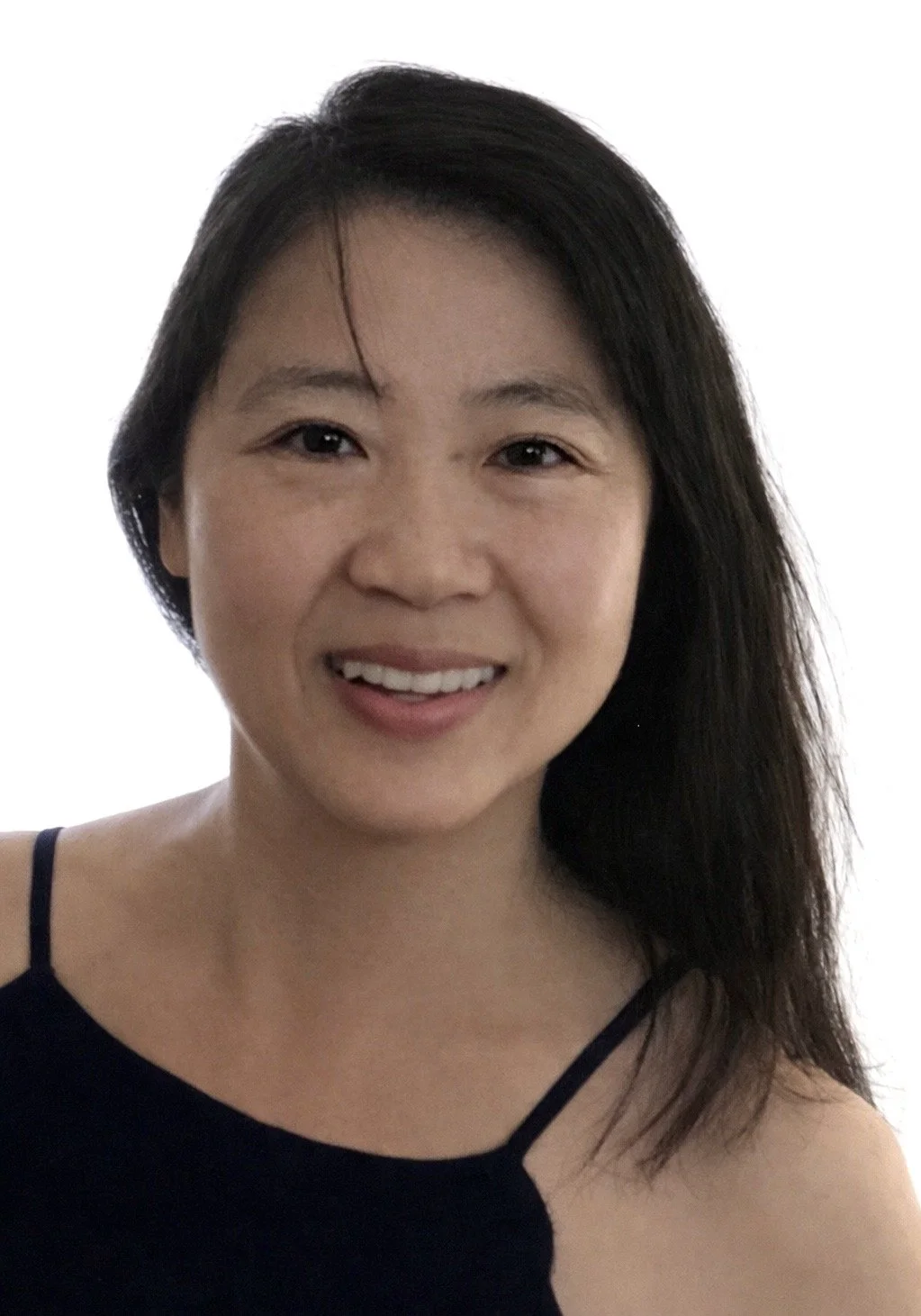
Jia Man is a visual artist whose work exists at the intersection of ikebana, photography, and mixed media, translating an ancient Japanese art form into a contemporary visual language. Now based in the United States after relocating from Tokyo, she brings a deeply rooted engagement with Zen aesthetics into both her studio practice and her work as a college professor.
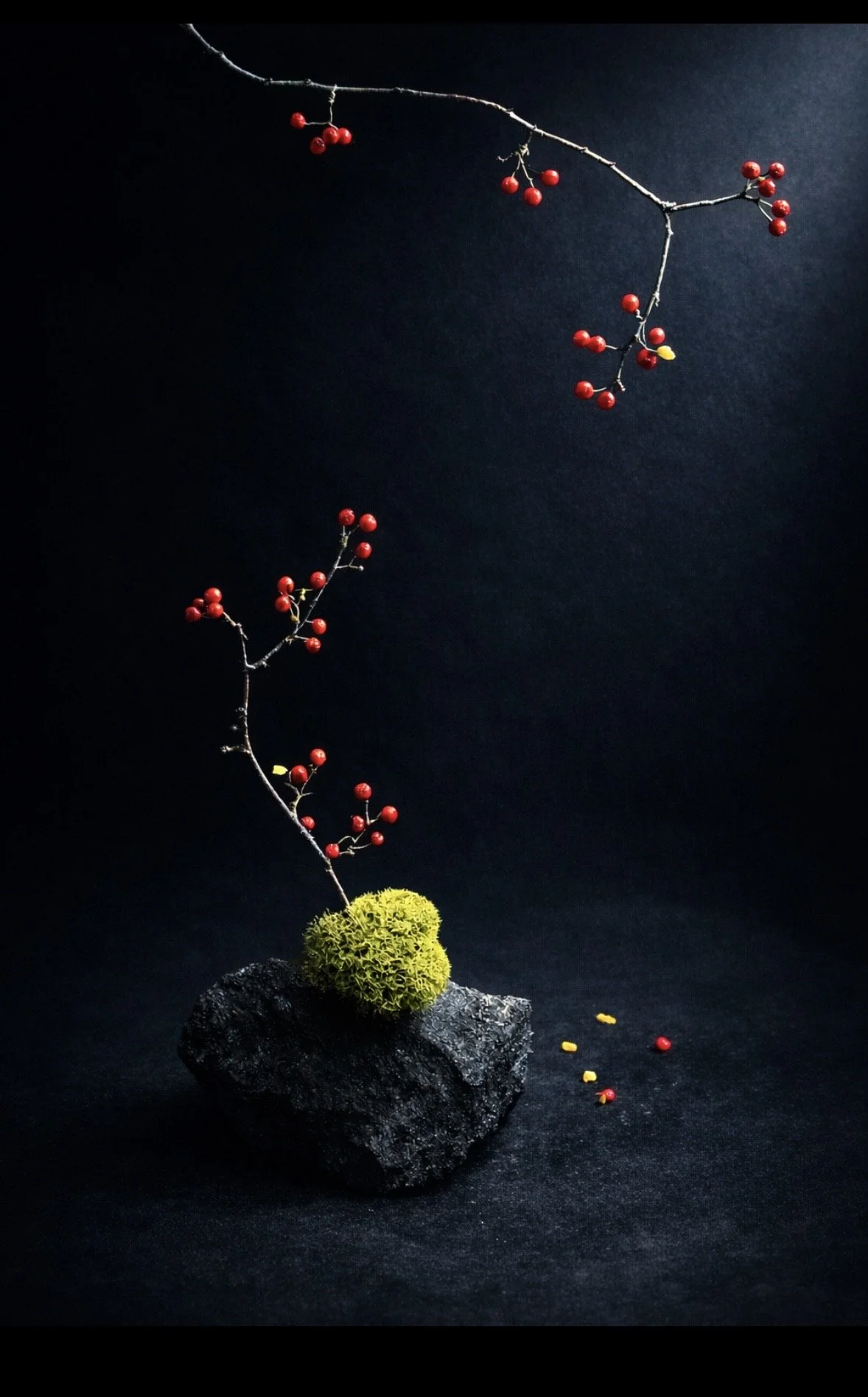
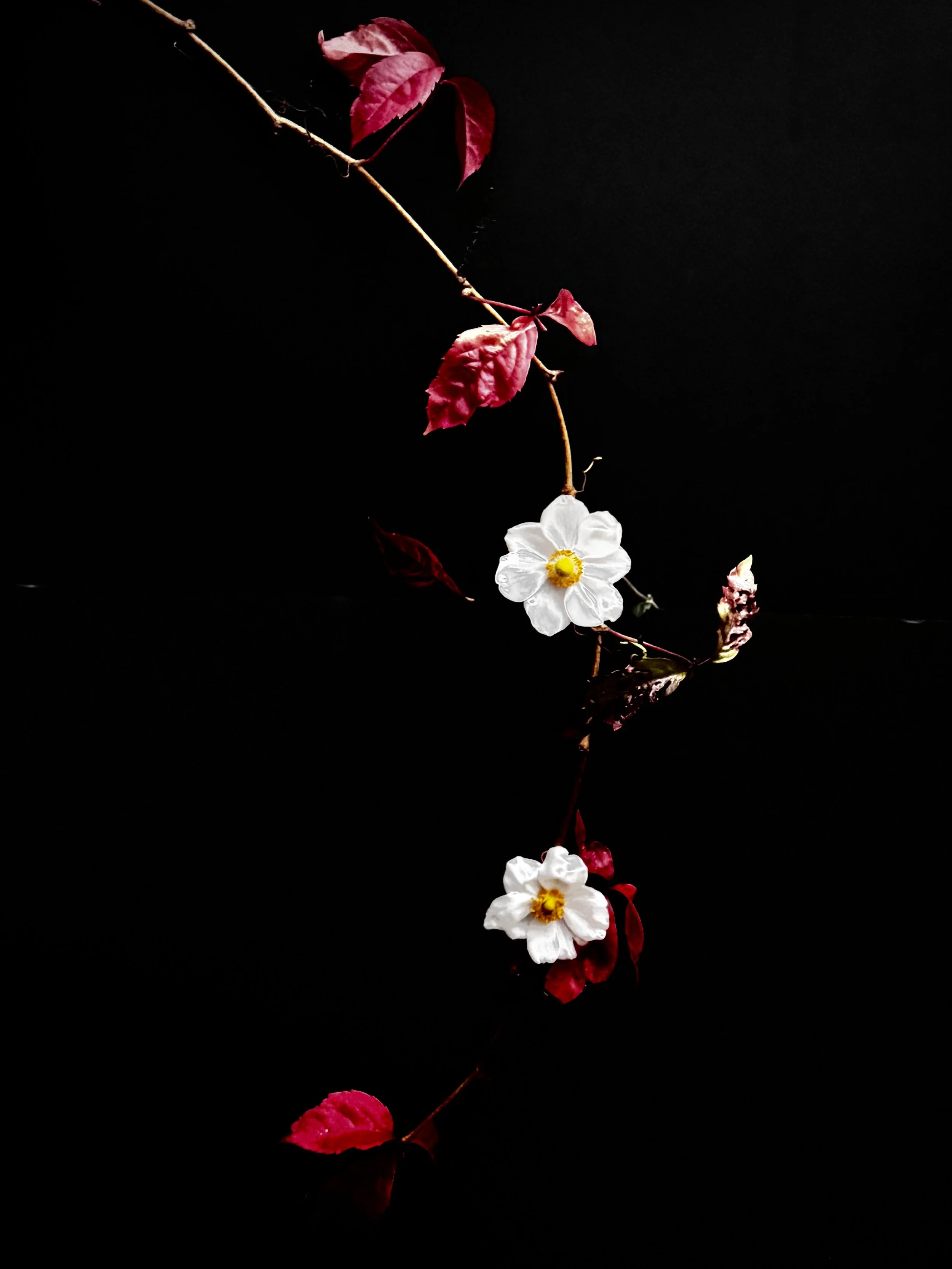
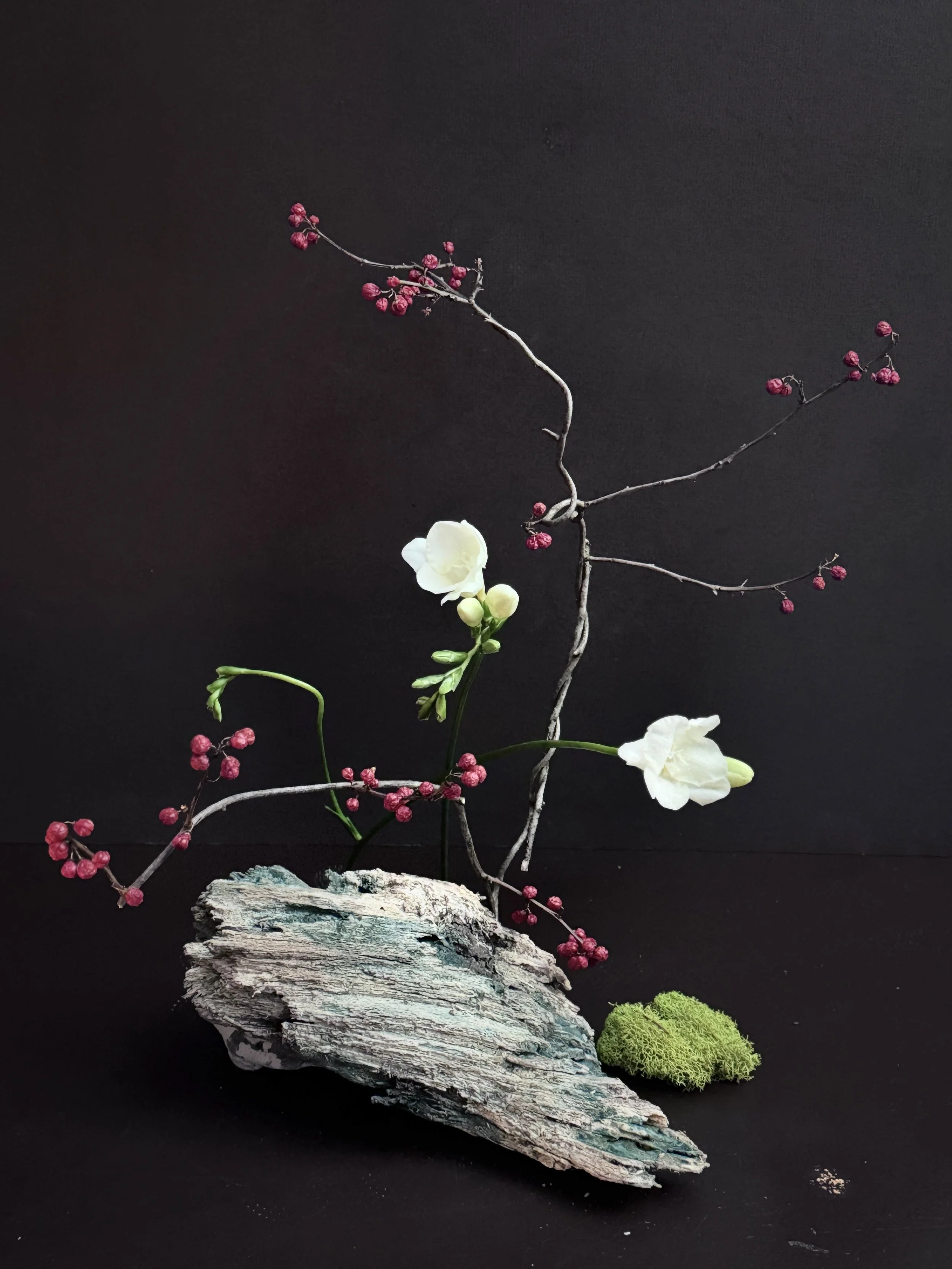
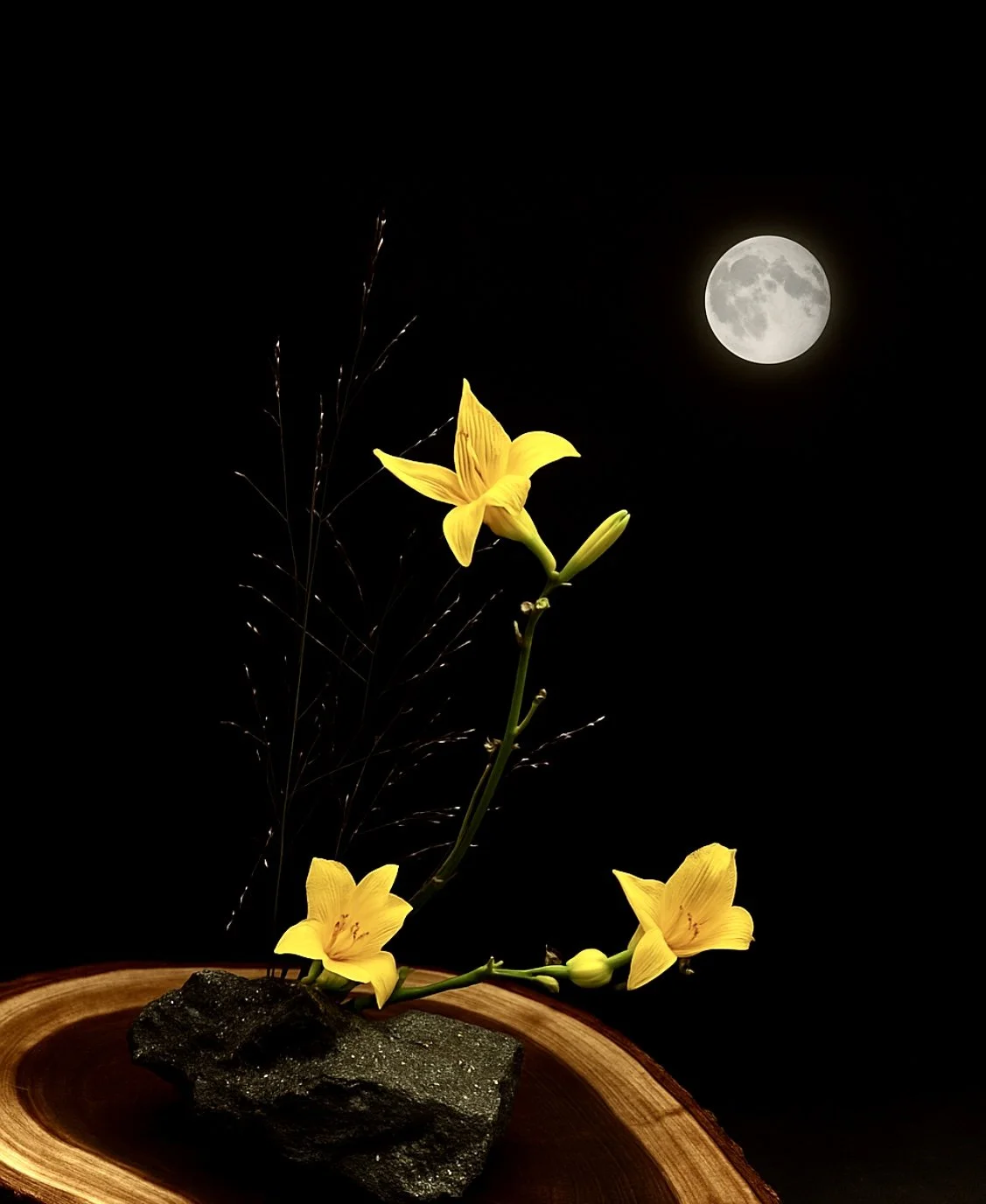
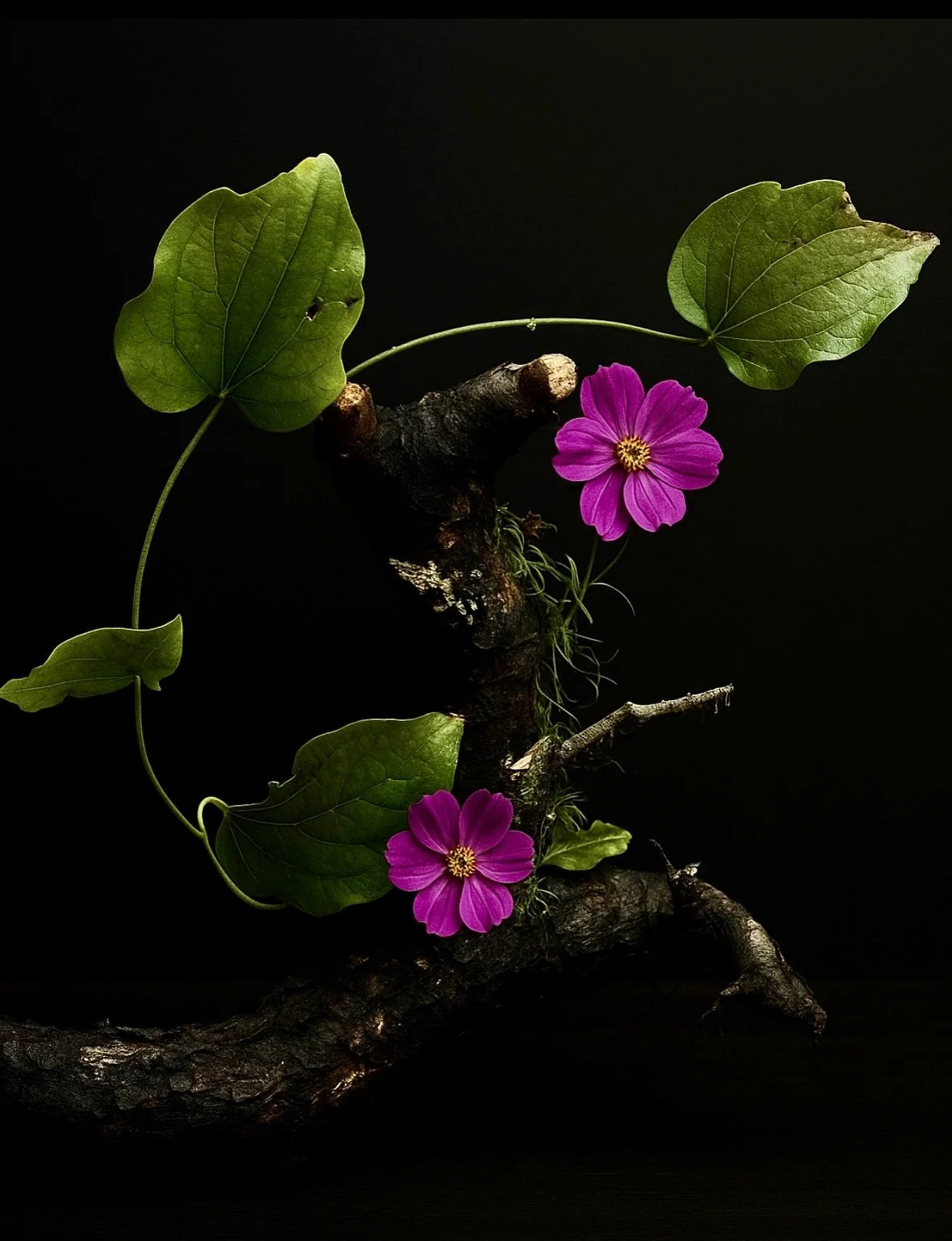
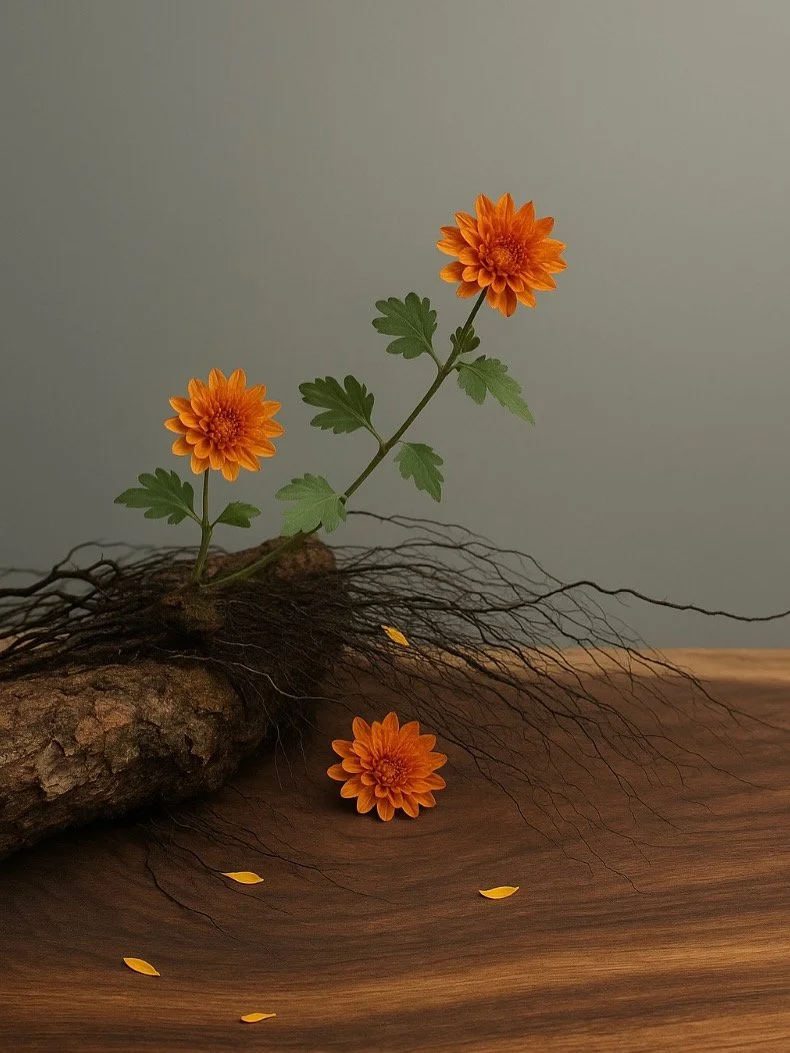
Using natural materials such as flowers, branches, petals, and stones, Jia constructs ephemeral ikebana arrangements that are intentionally temporary. Photography becomes a means of pausing these fleeting structures in time, revealing how subtle shifts in light, balance, and perspective quietly reshape perception. Influenced by wabi-sabi, mono no aware, and the concept of yūgen, her work locates beauty not in permanence, but in moments of transition and restraint.
Moving beyond documentation, Jia extends her photographic images through layered mixed-media processes. By reworking printed surfaces with texture, pigment, and physical intervention, she creates works that exist between image and object, presence and disappearance. These tactile gestures form a dialogue between tradition and renewal, inviting contemplation rather than narrative.
Her work has been exhibited internationally, with presentations across Paris, London, Brussels, Milan, Amsterdam, Venice, New York—including Chelsea and Tribeca—and Tokyo, as well as public digital displays in Times Square, Athens, and London. Existing between disciplines, cultures, and roles as both artist and educator, Jia Man’s practice resists immediate explanation—asking instead for stillness and sustained attention, and offering a meditative encounter with time, material, and impermanence.
Can you tell us about your journey as an artist? How did it all begin?
My journey as an artist began with a long engagement with ikebana, the Japanese art of flower arrangement, which taught me to see form, space, and impermanence as quiet but powerful forces. I lived in Tokyo for many years, where daily encounters with seasonal change and restrained beauty shaped how I observe the natural world. Over time, photography became a way for me to extend ikebana beyond the moment of arrangement. I began creating photo-based mixed-media works that preserve fleeting gestures—branches bending, petals falling, forms holding tension—while allowing space for contemplation. My practice explores stillness, resilience, and the subtle persistence of life. Alongside my studio practice, I am a college professor, and teaching has deepened my sensitivity to process, discipline, and reflection. Moving between cultures and roles—as an artist, educator, and observer—continues to shape my work, which seeks to hold quiet moments where time seems to pause.
How would you describe your art style and how has it evolved over time?
My art style is minimal, quiet, and contemplative, influenced by ikebana and Eastern aesthetics. Over time, it has evolved from physical arrangements into photo-based mixed media, allowing a deeper exploration of stillness, impermanence, and emotional depth.
What themes or ideas do you explore in your work?
I explore impermanence, quiet resilience, transition, and the space between growth and decay. My work focuses on subtle moments where fragility and strength coexist, and where stillness becomes a form of presence.
Can you walk us through your creative process?
My process begins with selecting natural materials and arranging them intuitively, following ikebana principles. I photograph the work slowly, then refine it through subtle digital layering, allowing the final image to hold both physical presence and emotional memory.
What materials or techniques do you most enjoy working with and why?
I enjoy working with natural materials such as branches, flowers, stones, and moss, combined with photography and digital layering. These materials allow me to express impermanence, texture, and quiet tension while preserving stillness.
How do you balance technical skill and emotional expression in your art?
I use technical skill as a foundation to create clarity and restraint. Emotional expression emerges through composition, light, and silence, allowing feeling to remain subtle while structure holds the work together.
Who or what inspires you the most as an artist?
I am most inspired by nature and quiet moments of observation. Small seasonal changes, fragile materials, and stillness guide both my thinking and visual language.
Are there any artists past or present who have had a significant impact on your work?
Traditional Japanese ikebana philosophy has had a strong influence on my work, especially its emphasis on balance, restraint, and negative space. I am also influenced by minimalist and contemporary photographic practices.
Do you find inspiration in other disciplines,such as music,literature or film?
Yes. I often draw inspiration from poetry, classical music, and film. These disciplines shape my sense of rhythm, silence, and emotional pacing within an image.
What has been the most challenging aspect of your artistic journey so far?
The most challenging aspect of my artistic journey has been staying true to a quiet, contemplative practice while navigating external expectations and visibility in the contemporary art world.
What has been your most meaningful or memorable project to date?
My most meaningful project has been my ongoing ikebana photography in mixed media series, where I combine traditional Japanese floral philosophy with contemporary photographic and layered techniques. This body of work reflects personal resilience, time, and quiet transformation.
How has the digital age and social media impacted your practice and reach as an artist?
The digital age allows my work to reach a global audience and connect across cultures. It supports experimentation and visibility while encouraging me to remain intentional and grounded beyond trends.
If you could collaborate with any artist dead or alive who would it be and why?
If I could collaborate with any artist, it would be an ikebana master or a Zen-influenced artist, because I value restraint, balance, and the quiet dialogue between nature and space.
Man Jia · jiam@lemoyne.edu · jiamanikebana.weebly.com · @manjia9270