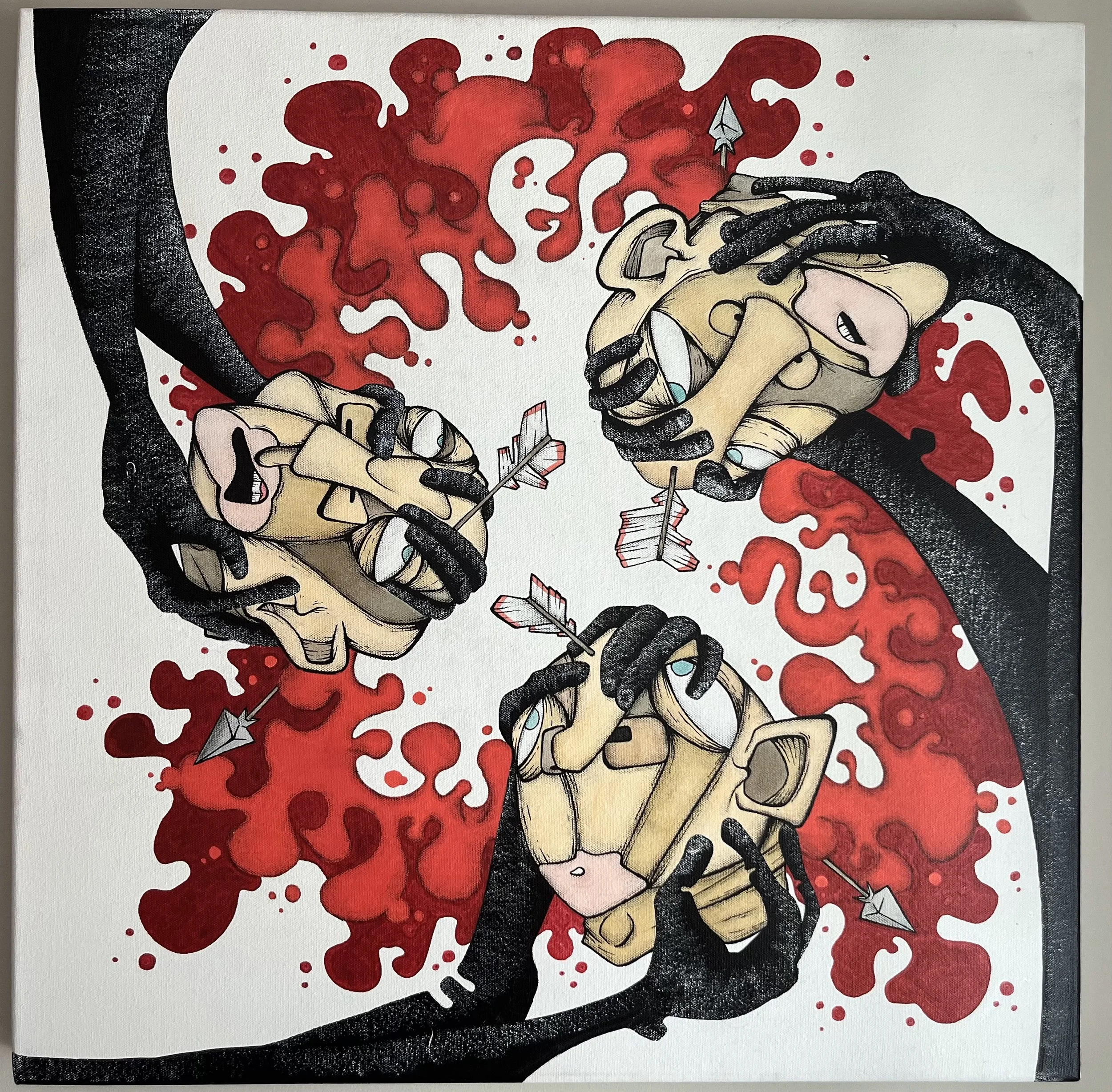
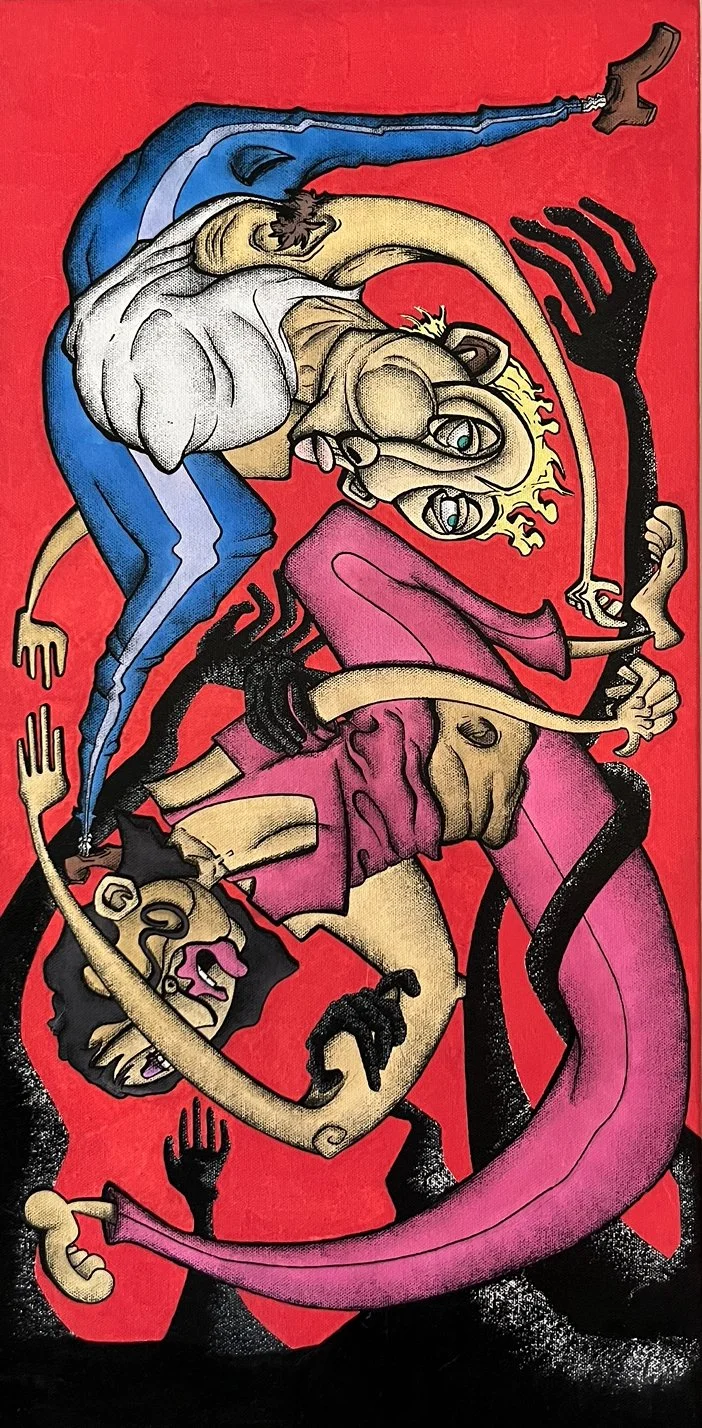
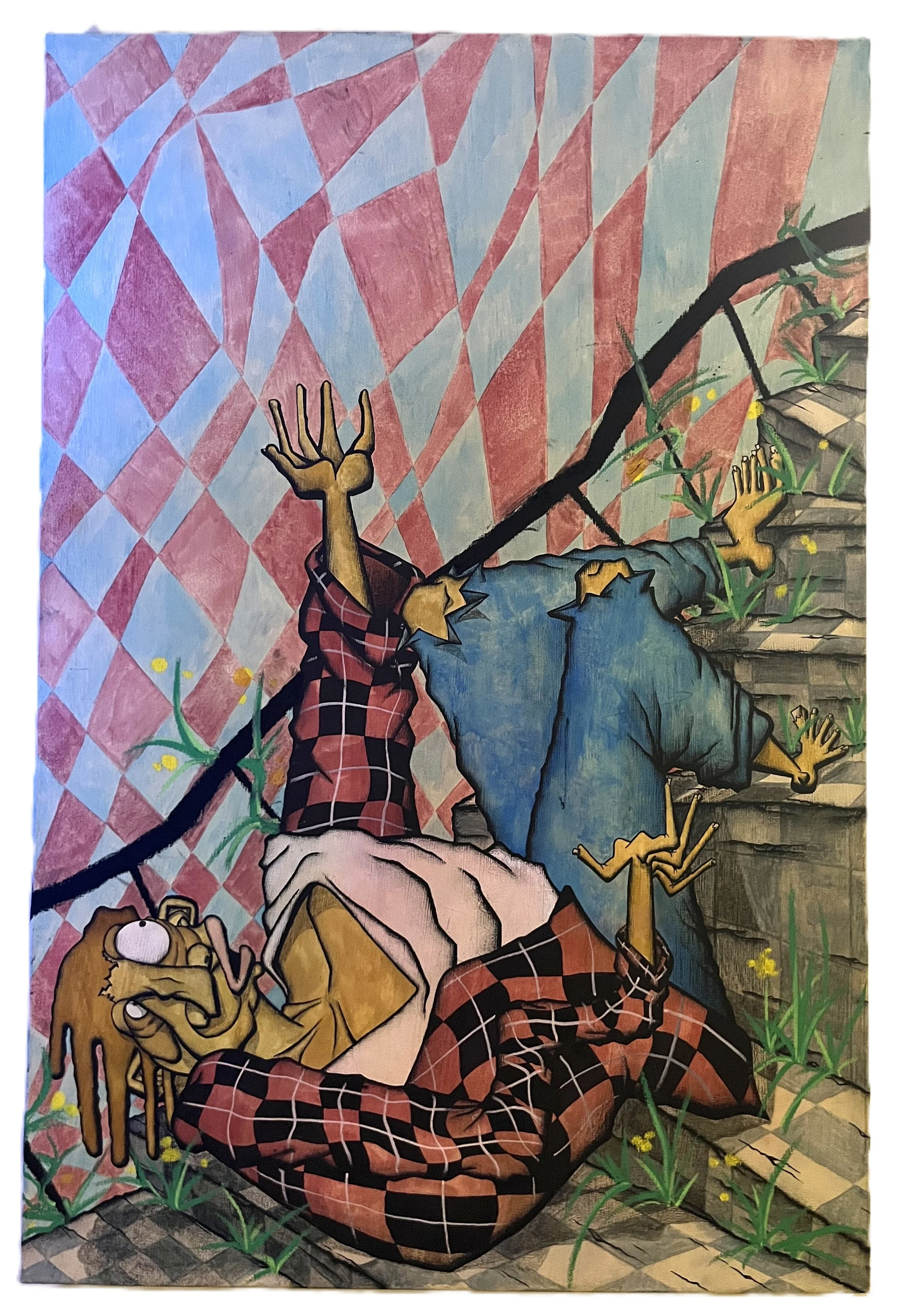
Samuel Pitzer: Confronting the Dark Corners of the Human Condition
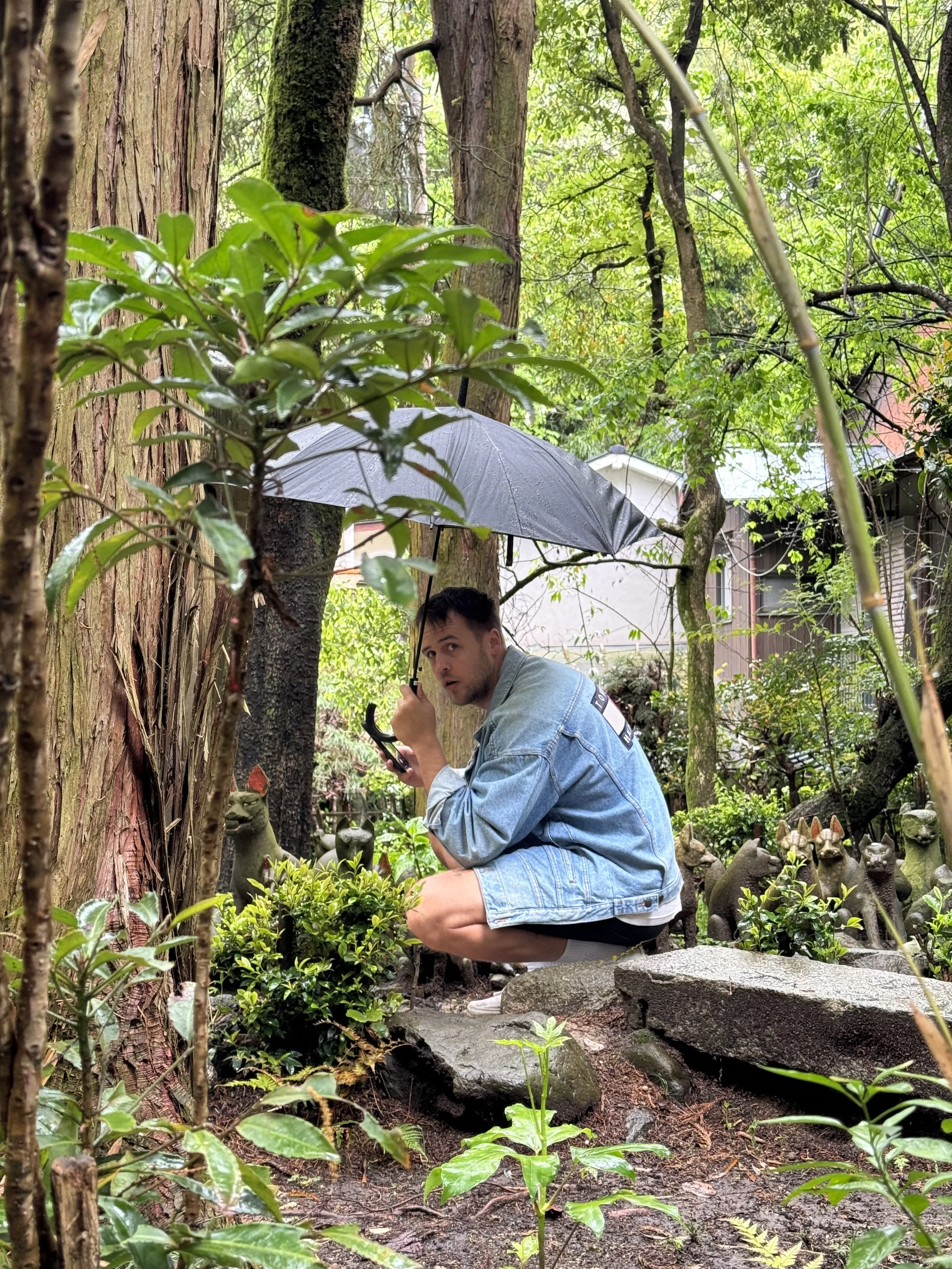
Samuel Pitzer is an artist and writer currently based in Charlotte, North Carolina, with an upcoming transition to Philadelphia, Pennsylvania. Working across a dynamic range of mediums—including acrylic, colored pencil, ink, watercolor, and oil pastel—his practice embraces both material experimentation and emotional depth.
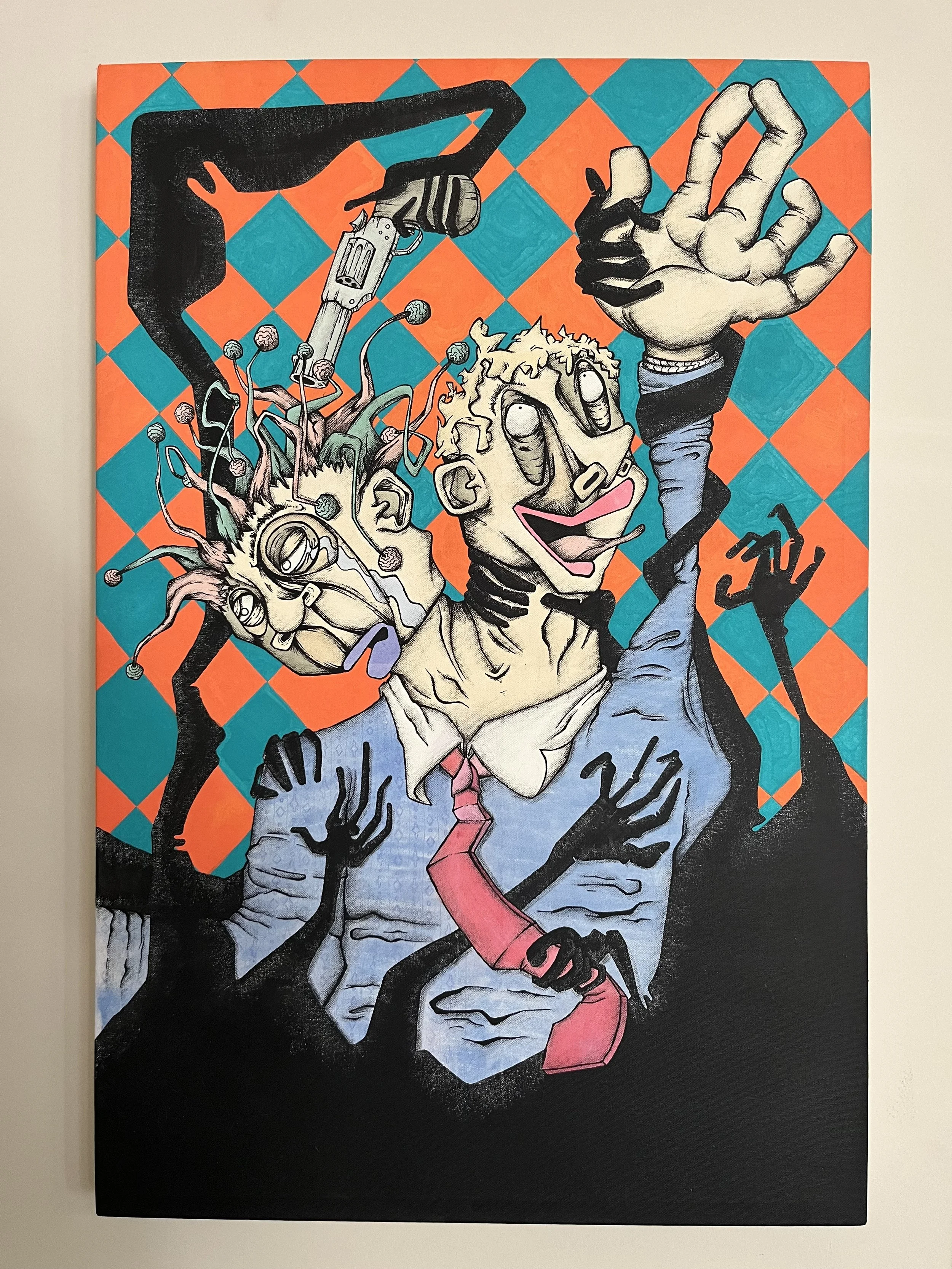
Pitzer’s work delves into the darker edges of the human condition, portraying figures suspended in states of agony, depression, and psychological unrest. Rather than turning away from discomfort, he leans into it—using his imagery as a way to illuminate what is often left unspoken or unseen.
At the core of his practice is a search for meaning that extends beyond the self. His compositions feel less like singular creations and more like fragments of a larger, internal archive—shaped by memory, influence, and something more elusive. By merging abstraction, spiritual identity, and tangible reality, Pitzer constructs visual narratives that question where individuality ends and something universal begins.
His work ultimately becomes an inquiry into connection—an attempt to trace the invisible threads that bind human experience, emotion, and a sense of the divine.
Let’s get to know him better.
Can you tell us about your journey as an artist? How did it all begin?
My dad is an artist. I watched him create things from a young age and that an impact on me for sure. I don't know exactly when I started creating art, I feel like I've just always done it. When I look back at old notebooks from school, they're filled with little doodles. I've had some pivotal moments in my life but really I started making serious works about a year ago. I was overcome with this unexplainable depression. I just felt like I wasn't living for my purpose, so I abandoned the idea that I was going to have a normal life/career and have funneled all of my energy into creating artworks that challenge me in different ways. I want each piece I create to be a hurdle for myself and push me to create more elaborate and provocative things.
How would you describe your art style and how has it evolved over time?
My style is my own. I don't mean that in an arrogant way but in a way that I know how much time and work it took to find my own style and how much work I'm still putting in to tweak it with each new project. If I had to put a name to it, it would be something like modern cubism. You know, it's like slightly abstract and surreal.
Do you find inspiration in other disciplines,such as music,literature or film?
These have all influenced me for sure, but film mostly. I love movies and often get lost in them and obsess over them. I'm really into movies with people smoking cigarettes and shooting each other. I don't know why. I guess it's just exciting. I paint a lot of people getting shot and smoking. I guess death is just fascinating to me.
How do you handle creative blocks or periods of self-doubt?
The self-doubt is real. It hits hard and it's constant. I have these super high moments though where I'm like "yeah, I'm the greatest to ever do it." Then the lows hit hard and I get overwhelmed with anxiety and I look at all the things I created and they just disappoint me so much. But I tell myself that this isn't reality and this feeling will pass. And it does. But finding the middle ground between these two things is seriously difficult for me. But more so, when I feel like giving up, it's like give up and do what? The world is pretty much falling apart, you might as well just make art.
What are your long-term goals as an artist?
My long term goals are to find a community where I can thrive and keep creating things that speak hard truths to people. I don't want to become stagnant. I want every piece to be a new challenge, a new adventure. Sometimes this means I fail in my execution, but I always learn something and add new techniques to my arsenal. So really, my greatest goal is to just keep making dope work.
How do you see the role of art in society today?
I can only hope that when people see my work that it makes them uncomfortable and forces them to look within themselves and rethink how they view the world and their own life within it.
What does success look like for you as an artist?
On the basic idea of success it means just being able to do this full time. Beyond that, I want the world to be able to view my art and have it speak to them in ways that nothing else could. Successful art should have a point and a purpose. It should record histories and force the truth down peoples throats. Successful art to me isn't just something you put on a wall but something that breaks down your whole world and shapes it into a new one.